

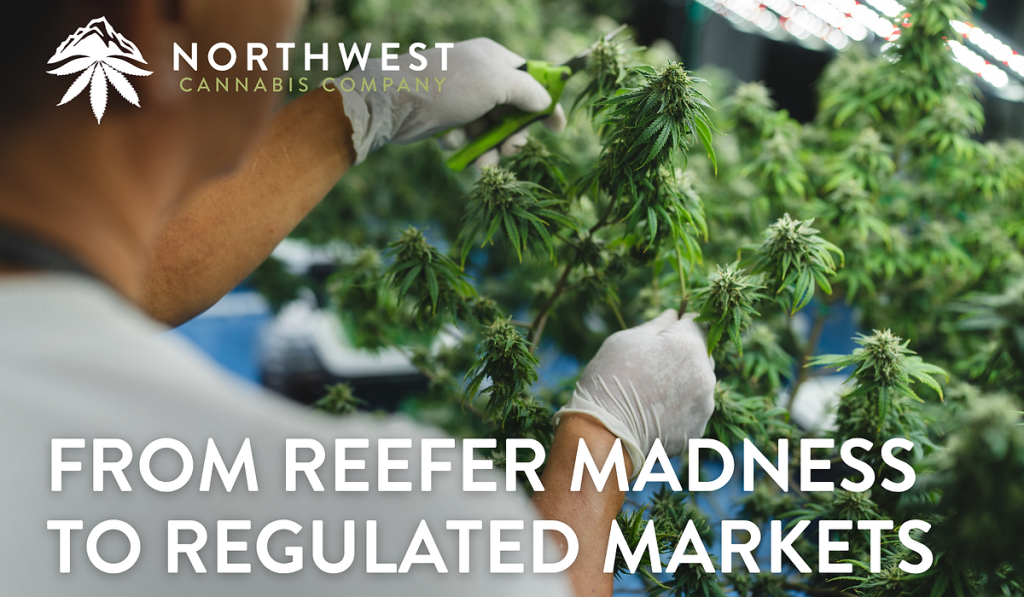
The history of cannabis prohibition in the US is not a straight line. It’s a cycle of agricultural promotion, federal restriction, criminal enforcement, reform, and modern regulation. Once encouraged as an agricultural commodity, it has also been criminalized at the federal level, culturally stigmatized, defended by reform advocates, and now regulated as a commercial industry in states like Oregon.
National Weed Appreciation Day offers a reason to step back and examine how cannabis legalization history and cannabis cultural shifts evolved together. Below is a consolidated timeline of major legal milestones that shaped cannabis policy at both the federal level and within Oregon.
How Cannabis Regulation Began
1619–1800s: Hemp as Infrastructure. Colonial governments encouraged hemp cultivation for rope, sails, and textiles. In 1619, the Virginia General Assembly passed Act XII requiring hemp planting.
1906–1937: Federal Oversight and the Start of Prohibition. The Pure Food and Drug Act of 1906 introduced federal labeling requirements for cannabis extracts. In 1930, the Federal Bureau of Narcotics was created. The Marihuana Tax Act of 1937 effectively criminalized cannabis nationwide. Oregon had already outlawed nonmedical cannabis distribution in 1923.
1942–1956: Wartime Hemp and Mandatory Minimums. During WWII, the USDA promoted hemp cultivation through the “Hemp for Victory” campaign. Enforcement intensified soon after — the Boggs Act of 1951 and Narcotics Control Act of 1956 imposed strict mandatory minimum sentences.
1968–1973: Federal Restructuring and the Controlled Substances Act. The Controlled Substances Act of 1970 classified cannabis as Schedule I. NORML was founded in 1970. Nixon’s 1971 address launched the War on Drugs. The 1972 Shafer Commission recommended decriminalization. In 1973 the DEA was created, and Oregon became the first state to decriminalize possession of small amounts of cannabis.
1980s: Escalation of Federal Drug Enforcement. The Anti-Drug Abuse Act of 1986 reintroduced strict mandatory sentencing. In 1989 President Bush declared a renewed War on Drugs.
1998–2015: Oregon Legalization and Regulated Retail. In 1998, Oregon voters passed Measure 67 (medical marijuana). In 2014, Measure 91 legalized adult-use cannabis. In 2015, regulated recreational retail sales began under OLCC oversight.
2023–2026: Federal Rescheduling and Ongoing Reform. In 2023, HHS recommended moving marijuana to Schedule III. In 2024, DOJ published a proposed rescheduling rule. In 2025, a presidential executive order directed the AG to complete the Schedule III review. In 2026, Oregon’s HB 4142 advanced regarding hospice and palliative care access.
How Public Perception Changed
1920s–1930s: Stigma and Propaganda. The 1936 film Reefer Madness portrayed marijuana use as socially destructive. Louis Armstrong faced cannabis-related arrests.
1944–1967: Early Research and Reevaluation. The 1944 La Guardia Report challenged assumptions about marijuana-induced violence. The 1967 President’s Commission found limited evidence linking marijuana to violent crime.
1970s: Counterculture and Reform Advocacy. Bob Marley, Jimi Hendrix, Willie Nelson, Pink Floyd, and The Grateful Dead became culturally associated with cannabis. High Times magazine was founded during this period.
1980s–1990s: Media Representation and Anti-Drug Campaigns. Federal anti-drug campaigns expanded. Cannabis became a recurring theme in music and film (Snoop Dogg, Dr. Dre, Dazed and Confused, Friday, The Big Lebowski).
2000s–2020s: Medical Normalization and Mainstream Acceptance. The Institute of Medicine’s 1999 report assessed the scientific basis for medical marijuana. Gallup polling shows majority public support for legalization. The modern cannabis consumer increasingly includes wellness-focused adults and professionals.
Who Uses Cannabis Today
The “stoner stereotype” does not hold up under federal data. Public polling and national surveys show cannabis use and legalization support distributed across age groups, income brackets, and professions. Bureau of Labor Statistics data does not show widespread workforce withdrawal in states with legal cannabis. In Oregon, cannabis is regulated through age-gated retail systems similar to alcohol.
National Weed Appreciation Day: Where Law and Culture Converge
National Weed Appreciation Day reflects more than a date on the calendar. From colonial hemp mandates to federal Schedule I classification, from Reefer Madness to regulated retail in Oregon, cannabis history in the United States is a story of changing assumptions and governance. Legal status and cultural status have moved together, and now the conversation continues.